Cutting to Peace: An Advent Reflection
Blog last updated: Wednesday, Dec. 3, 2025 at 9:30 a.m.
The word that Isaiah son of Amoz saw concerning Judah and Jerusalem. In days to come the mountain of the Lord’s house shall be established as the highest of the mountains and shall be raised above the hills; all the nations shall stream to it. Many peoples shall come and say, “Come, let us go up to the mountain of the Lord, to the house of the God of Jacob, that he may teach us his ways and that we may walk in his paths.” For out of Zion shall go forth instruction and the word of the Lord from Jerusalem. He shall judge between the nations and shall arbitrate for many peoples; they shall beat their swords into plowshares and their spears into pruning hooks; nation shall not lift up sword against nation; neither shall they learn war any more. O house of Jacob, come, let us walk in the light of the Lord!” —Isaiah 2:1-5 (NRSVue)
During this first week of Advent, I've been spending a significant amount of time contemplating what it means to find and be at peace.
As part of my daily prayer routine, I often pray the prayer of St. Francis of Assisi. I'm sure you know it. It begins, "Lord, make me an instrument of thy peace." A noble charge, but what does it mean to be an instrument of peace in today’s world?
I’ve often thought of peace as a future ideal, something utopian and noninstrumental. It’s an outcome, not an agent. It's not only an absence of conflict or tension, but of any undertaking. It's found in meditation. In staying still. In silence and in ceasing activity. It's something that comes after time and with space. We are working toward peace. It is a goal for some time, but certainly not a task for now.
This understanding makes the idea of being an instrument of thy peace seem like a censure or a stopping. So I ask myself, how can I be an instrument—a tool of active use—for something that requires me to cease? It's like being asked to build stillness, to manufacture silence, or to construct the absence of activity. The very nature of being instrumental suggests action, movement, and engagement with the world, not withdrawal.
When it comes to Christ, the Prince of Peace, while he did tell people to stop some things and did withdraw—you know, there are the passages about do not worry (Matthew 6:34), do not judge (Matthew 7:1), and go and sin no more (John 8:11)—I would argue he was more a man of redefinition rather than censure.
His first miracle was quite literally to keep the party going. He took water and jars used for purification, a serious activity in Jewish customs, and said (I’m interpreting now), you know what, sometimes the purest thing, that thing that really makes us the most holy, is to find joy, to rejoice, and to celebrate. Spoiler alert: he ends up turning the water in these jars into the finest of party wines.
He then goes on to touch people who, by the day's standards, shouldn't be touched. He welcomes people whom religious and government leaders would say shouldn't be welcomed.
When people bring little kids to Jesus to be prayed over and healed, and the disciples try to stop them, what does Jesus say? "Let the little children come to me, and do not hinder them, for the kingdom of heaven belongs to such as these" (Matthew 19:14).
In parable after parable, he too redefines who neighbors are and what inclusion in the Kingdom of God looks like. Then he is eventually murdered on a cross, a Roman tool of execution, and ends up turning this state-sanctioned torture device into something life-giving.
This pattern of redemptive redefinition runs throughout Christ's ministry. He doesn't reject the world and its tools; he transforms them. And this is where Isaiah's vision becomes not just poetic, but practically revolutionary.
As I was sitting with Sunday's familiar scripture from Isaiah 2:4 (which also appears in the book of Micah) of the prophet and God's vision for a peaceful world and how it will come about, I realized it is more of an edit than a total scrap-and-start-again. “They shall beat their swords into plowshares and their spears into pruning hooks; nation shall not lift up sword against nation; neither shall they learn war any more.”
Isaiah is not saying that the world will end—that there will be another flood—or mass extinction event, and then the world will be rebuilt. He's saying that God will take the tools of war and make them into instruments of peace.
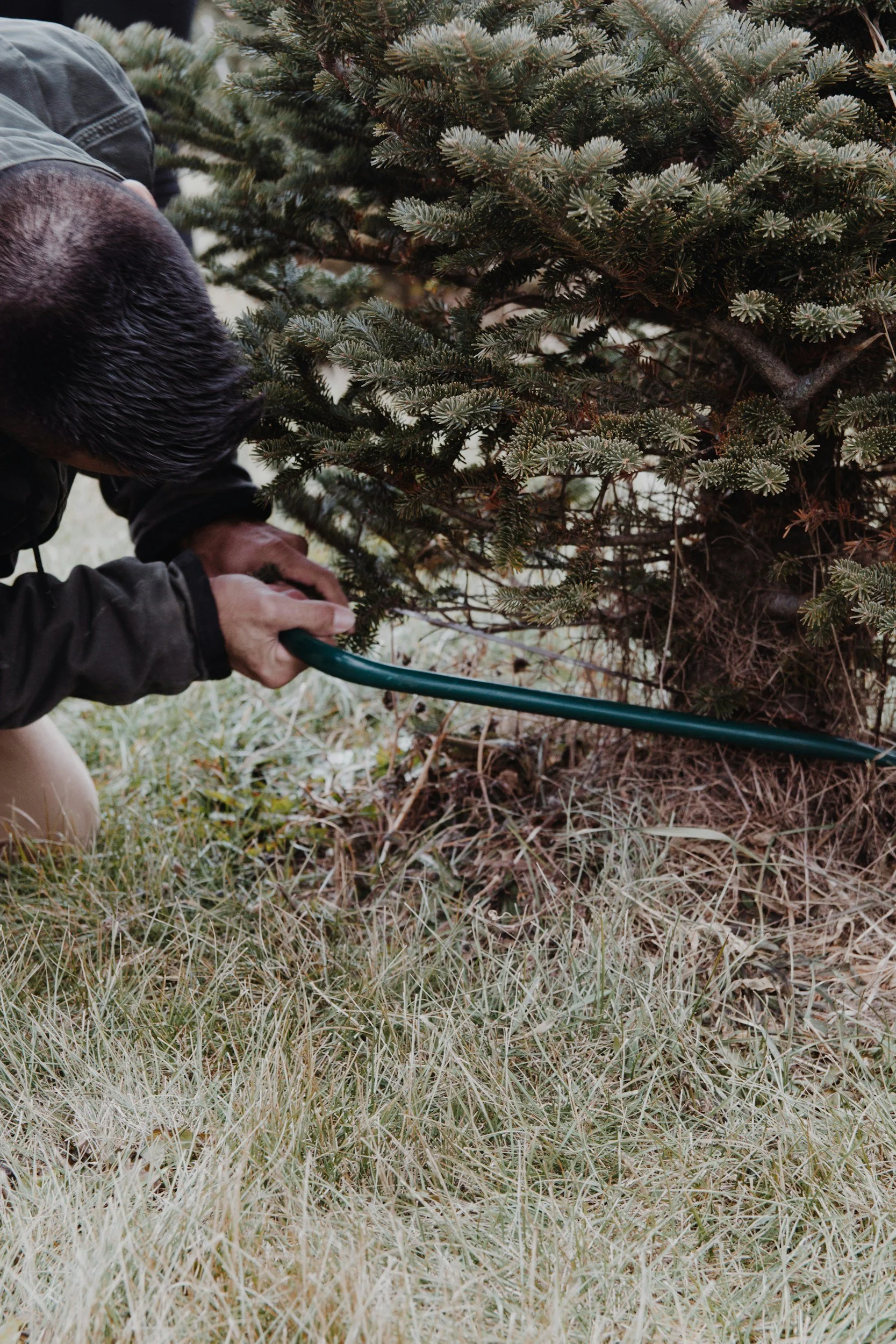
What I've come to discover in a closer rereading is that both the instruments for war and for peace—the swords and spears, plowshares and pruning hooks—they all still have points. They remain instruments for cutting. It's just they're now being used for different things. Instead of taking life, they are making room for new life.
As Rev. Dr. Martin Luther King Jr. said in his Christmas Eve sermon from 1967:
“It’s one of the strangest things that all the great military geniuses of the world have talked about peace. The conquerors of old who came killing in pursuit of peace, Alexander, Julius Caesar, Charlemagne, and Napoleon, were akin in seeking a peaceful world order. If you will read Mein Kampf closely enough, you will discover that Hitler contended that everything he did in Germany was for peace..What is the problem? They are talking about peace as a distant goal, as an end we seek, but one day we must come to see that peace is not merely a distant goal we seek, but that it is a means by which we arrive at that goal.”
Peace in the Christian framework is then less about an absence of tension or activity or life, but an inbreaking of love in the midst of our day-to-day. To be an instrument of peace is to make room for God to work in the soil of our lives. A redefining, a pruning of boundaries, and a cutting back of distractions. Peace is a plowshare and a pruning hook, not a stop sign or cease-and-desist order.
You see this redefinition in the way the Prayer of St. Francis continues: "Where there is hatred, let me sow love; where there is injury, pardon; where there is doubt, faith; where there is despair, hope; where there is darkness, light; where there is sadness, joy. O divine Master, grant that I may not so much seek to be consoled as to console, to be understood as to understand, to be loved as to love. For it is in giving that we receive, it is in pardoning that we are pardoned, and it is in dying that we are born to eternal life."
Notice the active verbs: sow, pardon, console, understand, love, give. These aren't passive states of being. They're movements toward others, engagements with the world as it is—a world full of hatred, injury, doubt, despair, darkness, and sadness. The prayer doesn't ask God to remove us from these realities, but to make us instruments that transform them.
I invite you today to find ways to let peace pervade your life during this Advent and Christmas season. Do not wait for the wrapping to be done and holiday parties, concerts, and activities to have ended to "find" peace.
Let peace enter the now.
Maybe this looks like listening to more Christmas music? Or reframing must-dos and have-to-dos as get-to-dos? Perhaps it's choosing to see the long checkout line as an opportunity to practice patience, or the demanding relative as someone who needs the gift of your presence. Whatever it may be, may the peace you find be a peace for the world.
In closing, I leave you with the Plowshare Prayer by Spence LaJoye.
“I pray that you're heard…And I pray that this works…I pray that this prayer is a plowshare of sorts…”